A Just Governance Policy and Legislative Platform
A New Federal Policy Platform for Just Governance
A federal legislative and policy agenda to transform the governance and public capital structures of the War on Terror and build systems rooted in universal rights, accountability, and community power.
Database and Analysis of State Terrorism Laws
A living database tracking the expanding patchwork of state terrorism laws, authorities, and executive actions across the United States.
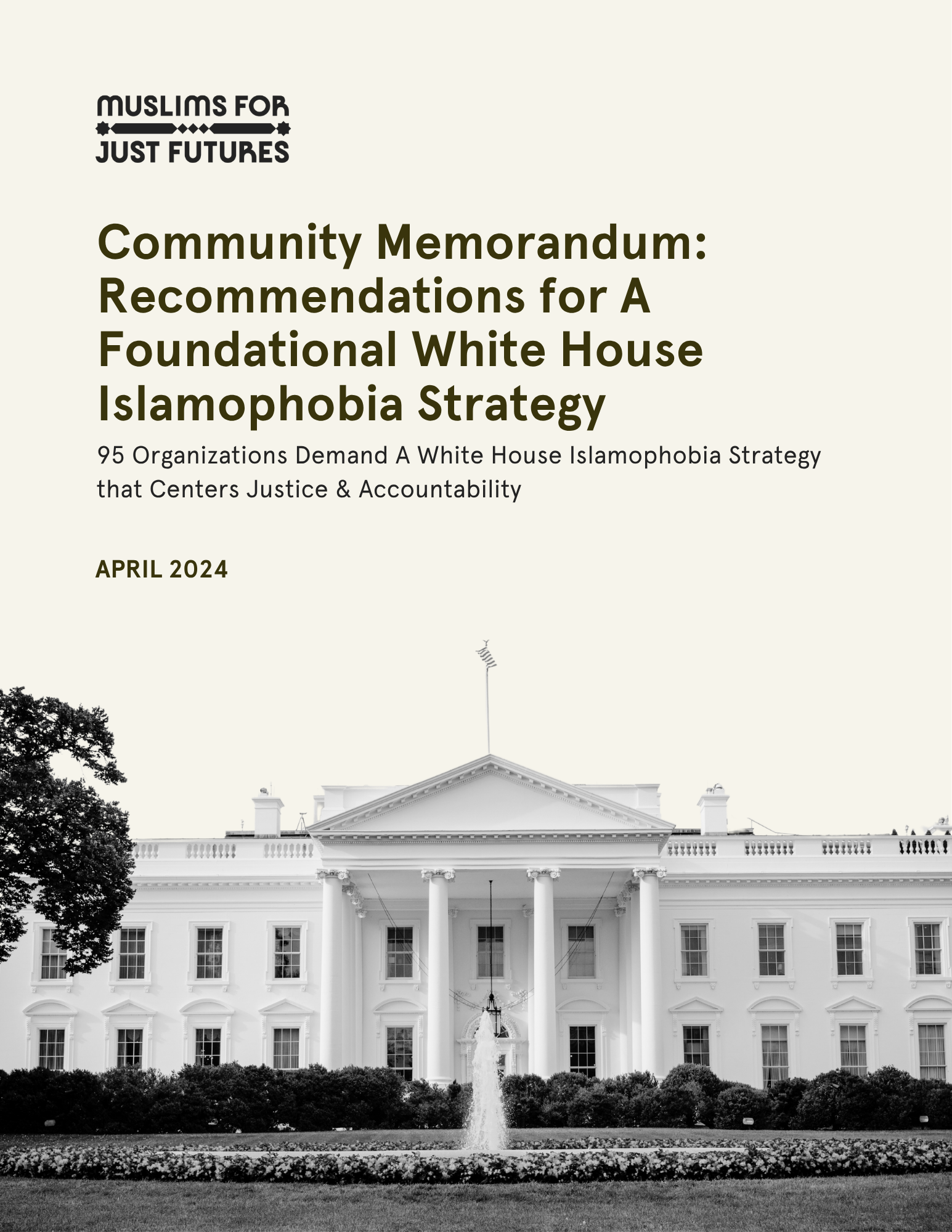
95 ORGANIZATION POLICY MEMORANDUM
The 2024 community-rooted platform, endorsed by 95 organizations, that established federal demands for government accountability and structural reform—and laid the foundation for MJF’s expanded Just Governance agenda.
Just Governance Federal Policy Agenda
At the 25-year mark of the “War on Terror,” MJF’s Federal Policy Agenda for Just Governance lays out a pathway for confronting both its ongoing harms and the governance infrastructure that enables and sustains them. Grounded in consultations with more than 100 individuals across 92 organizations and institutions, the agenda builds on 25 years of community experience and movement efforts, as well as MJF’s earlier movement-rooted policy demands, including our 2024 Community Memorandum: Recommendations for a Foundational White House Islamophobia Strategy, endorsed by 95 organizations. Guided by five pillars—Government Accountability, Transitional Justice, Transformative Justice, Freedom to Thrive, and Solidarity—the agenda advances congressional legislation, oversight and appropriations reforms, executive actions, and structural policy changes across five priority policy spheres. It also examines terrorism-related legislation in the 119th Congress, highlighting the growing imbalance between efforts to dismantle the War on Terror architecture and proposals that would further expand it. At its core, the agenda connects law and capital: law provides the authority and legitimacy for the apparatus, while public investment builds the capacity to operationalize and sustain it. Together, these priorities translate 25 years of community and movement work into a long-term Just Governance agenda for what must come next.

Public Capital Financing the War on Terror
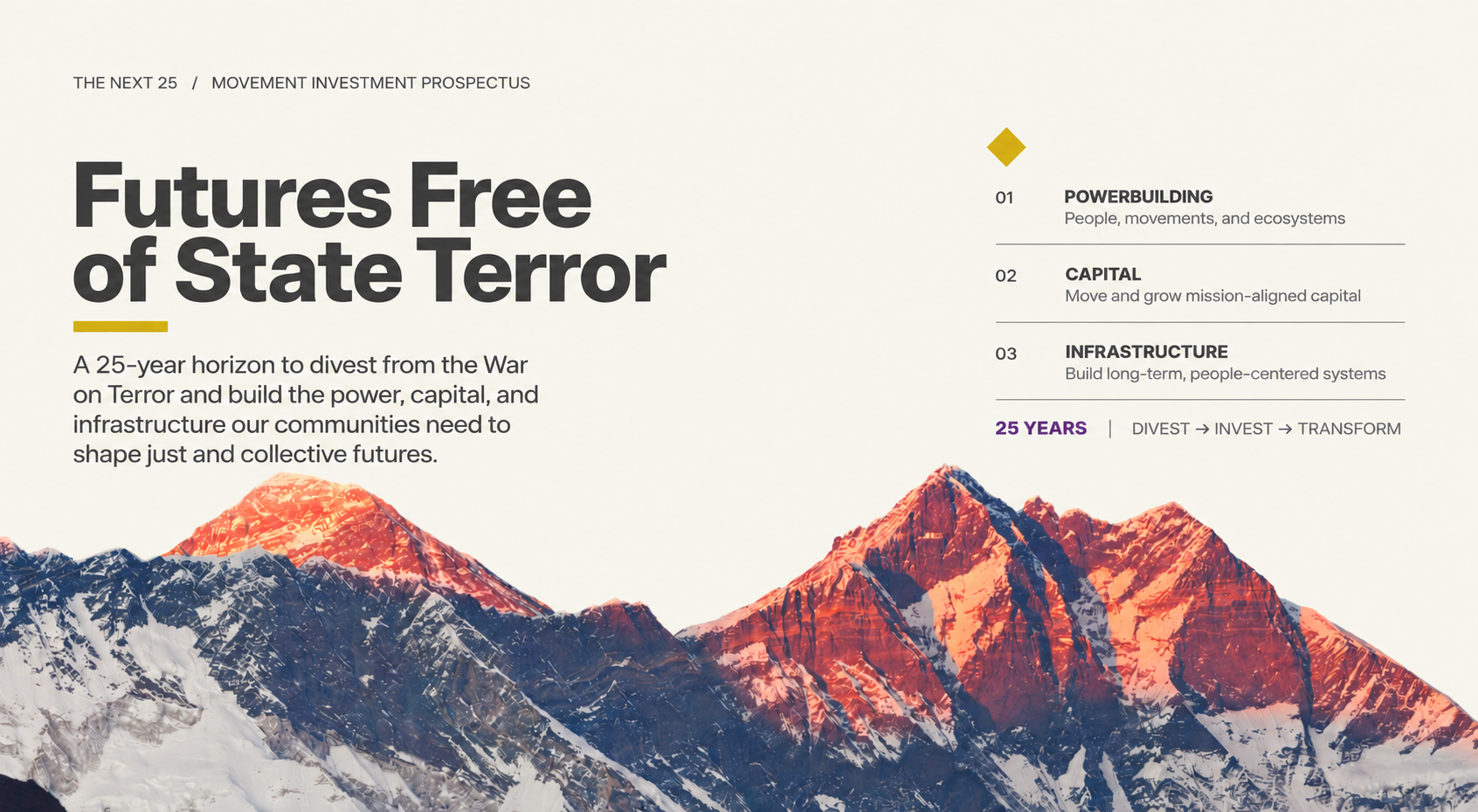
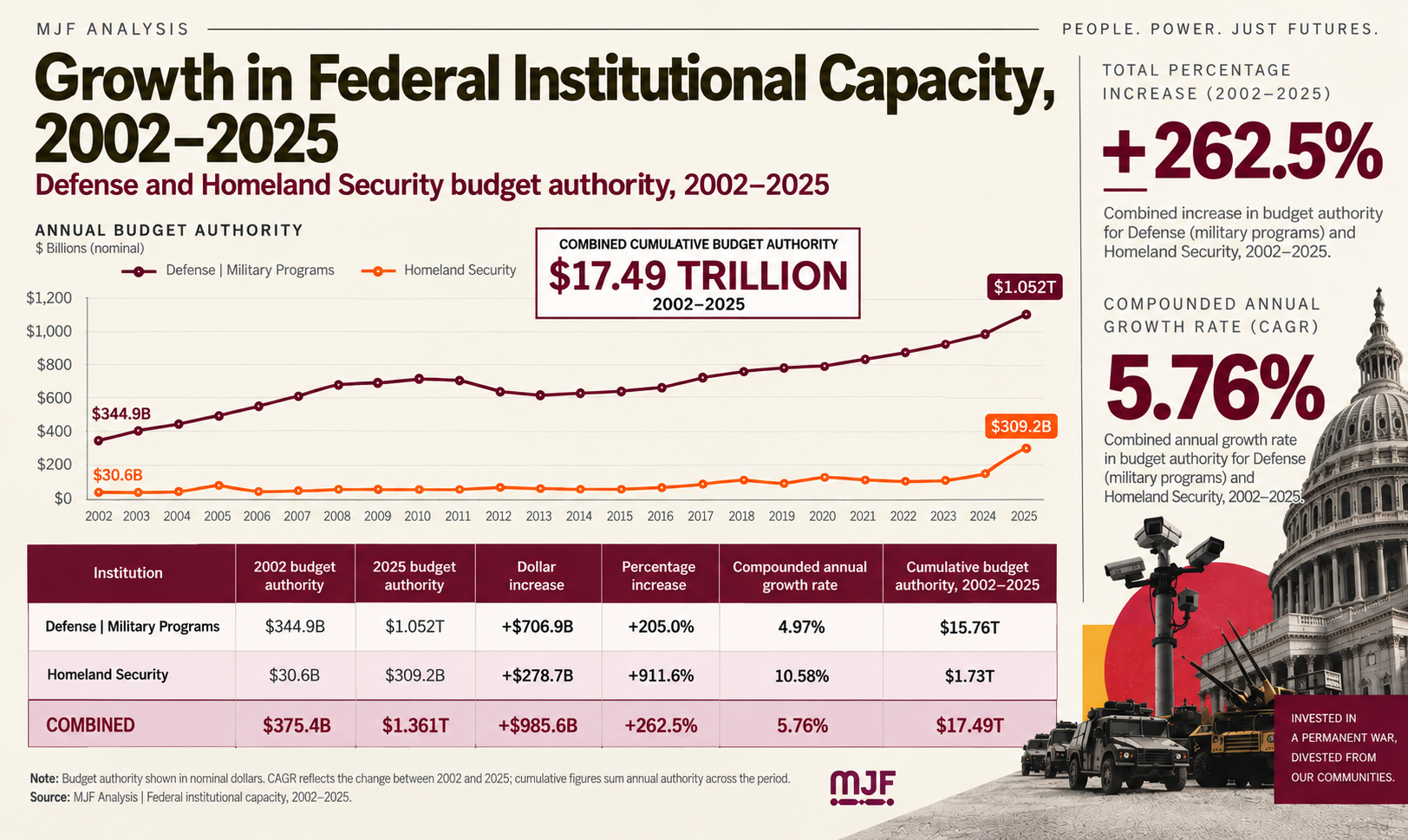
Our federal policy platform includes new analysis examining the scale of public capital authorized by the government to build and sustain the broader infrastructure unleashed by the War on Terror. From 2002–2025, the federal government made approximately $17.49 trillion available in budget authority for the Department of Defense (DOD) and Department of Homeland Security (DHS). DHS’s budget authority grew at a compound annual growth rate of 10.6%, while DOD’s budget authority grew at 4.97%, demonstrating the sustained growth in public capital directed toward these institutions. Our legislative and capital analysis indicates that this infrastructure is poised to substantially grow further over the next 25 years, as new authorities and proposed increases in defense resources expand both the legal and financial architecture that sustains it. Our final prospectus will project public and private capital flows into the broader War on Terror architecture over the next 25 years. This scale of investment demands a federal reckoning with the laws, institutions, authorities, and public capital that built and sustain the “War on Terror.” This is especially pressing as this apparatus is financed in part through public debt, shifting substantial costs onto current and future generations and constraining the public resources available for their economic futures.
Expansion of State Counterterrorism Laws
Explore our living database and primer on state anti-terrorism laws in the U.S.
Alongside the expansion of the federal War on Terror architecture, states are expanding their own counterterrorism laws and authorities. In recent years, states have amended civil and criminal laws, passed new legislation, and issued executive orders addressing terrorism. This living database and primer track these developments and emerging trends, with a focus on Southern and other higher-risk states.

Meeting the Moment
September 2026
The Building Beyond Policing Network and Democratizing Justice Initiative’s Meeting the Moment: Lessons and Guidance from the Movement on Resisting Authoritarianism examines policing not as a neutral institution, but as a central mechanism of state power and social control, situating the expansion of criminalization, surveillance, and carceral infrastructure within the broader struggle over authoritarianism and fascism in the United States. Organized around Recognition, Refusal, and Rebuilding, the collection brings together multiple perspectives on the historical roots of authoritarianism, the erosion of public oversight, racialized policing, and lessons from communities confronting expanding state power. Muslims for Just Futures (MJF) contributed to this edition with an analysis of state terror economies and the War on Terror, tracing how militarism, racial capitalism, surveillance, policing, borders, resource extraction, and the criminalization of Muslim and other marginalized communities operate across domestic and global contexts. Together, these contributions frame the fight against policing, state terror, and the War on Terror as interconnected parts of a broader project confronting authoritarianism and fascism and building political possibilities beyond carceral systems.