A Call to Action: Buy Local and Support Local Economies
This Ramadan, Muslims for Just Futures is issuing a clear and urgent call to invest your dollars and purchasing power in local community businesses, especially Muslim and immigrant owned establishments. These businesses are financially struggling due to the escalating impact of federal and local immigration enforcement across the country. Immigration enforcement and federal policies have economically devastated critical immigrant and refugee-owned businesses. These businesses serve a vital role in building local community infrastructure from creating jobs, developing brick and mortar neighborhoods, and cultivating a sense of belonging. Unfortunately, economic corridors led by immigrant and refugee communities are facing catastrophic losses.
Understanding Immigrant and Refugee Economic Power
Immigrant and refugee communities are foundational to the U.S. economy, holding enormous purchasing and entrepreneurial power and playing an outsized role in leading innovation.
Immigrants spend an estimated 1.7 trillion annually in the US.
From 1990 to 2016, immigrants represented 16 percent of inventors yet generated 23 percent of high-impact patents, a disproportionate contribution to innovation.
Outside of Fortune 500 companies, nearly 30% of ‘Main Street’ small businesses are owned by immigrants who offer jobs to other newly arrived immigrants and refugees.
These “Main Street” businesses include retail shops, restaurants, hotels, barbershops, dry cleaners, and grocery stores that form the backbone of neighborhood economic life. They transform neglected areas into thriving corridors where families live, work, and gather. Despite these important contributions, harmful narratives continue to justify policies that target immigrant and refugee communities.
Destroying Community Ownership through Federal Policy: Cutting Capital Access
In addition to federal immigration enforcement actions in cities with significant immigrant and refugee community presence, the Trump administration has advanced a set of broader anti-immigrant policies under Executive Order 14159, “Protecting the American People Against Invasion.” As part of this agenda, the Small Business Administration (SBA) issued a new rule barring non-citizens from accessing government-guaranteed SBA loans. The rule goes into effect beginning March 1, 2026 and requires that 100% of all direct and indirect business owners be U.S. citizens or nationals to qualify for SBA programs, including the 7(a) and 504 loan programs.This specific policy impacts 7(a) and 504 loans. The government’s 7(a) program alone provides critical loan guarantees to lenders serving small businesses and allows business owners to borrow up to $5 million to use as working capital, refinance debt, purchase equipment, and buy or upgrade real estate and buildings. By restricting eligibility for this vital loan program, this change effectively eliminates financial access to a major source of startup and expansion capital that has long been central to small business formation and growth for immigrant entrepreneurs. In doing so, the government is deepening the economic exclusion of immigrant and refugee communities.
Economic Impact of Federal Immigration Enforcement: Operation Metro Surge and Operation Midway Blitz
The economic impact of federal immigration enforcement is immediate and devastating. In Minnesota, since the launch of Operation Metro Surge, businesses in Minneapolis have lost an estimated $10–$20 million per week in sales, with overall revenue down by more than half. Immigrant-owned businesses in cultural corridors have experienced the steepest declines with 80% to 100% revenue losses, with many forced to shut down entirely. Over just December and January, more than 1,000 immigrant-owned businesses reported a combined $46 million in losses. Some small-business owners have reported 60–70% drops in sales. Local officials have acknowledged that this is not a single economic disaster with a clear end point. It is an ongoing economic disruption.
Chicago is experiencing similar warning signs.
In Little Village, often called the “Mexican Magnificent Mile,” business owners report significant declines in foot traffic as families remain indoors out of fear. The 26th Street corridor is one of Chicago’s strongest economic hubs outside of downtown. MJF has also spent the past year canvassing along Devon, and in the aftermath of Operation Midway Blitz, businesses along Devon Avenue in West Ridge, have reported drops in traffic and sales.
In Chicago, Asif Amin Cheema, a longtime small-business owner in Humboldt Park, was detained and deported. During his detention, he collapsed at O’Hare Airport due to serious medical conditions and required hospitalization. His removal shuttered his business and destabilized his family.
His daughter, Rabia Amin, shared the following statement with Muslims for Just Futures:
“Behind every immigration case is a family whose life is forever changed. No family should have to fight this hard just to keep a loved one safe, healthy, and together. We need to keep pushing for accountability from our elected officials and be a voice for the voiceless.”
Rabia’s testimony is a reminder that behind every policy is a family directly impacted.
Therefore, this Ramadan we are inviting our communities to take action through the following calls to action:
1. Buy Local & Spend With Purpose and Intention (Niyyah)
Purchase your iftar meals, Eid clothing, and gifts from local immigrant-owned businesses and cooperative businesses. Shift your weekly spending to neighborhood storefronts, cooperative businesses, and small businesses. Take MJF’s Ramadan Pledge and commit a dollar amount you will redirect intentionally. This pledge is about repurposing your existing spending habits this Ramadan, channeling your purchasing power with niyyah (intention) to uplift and sustain local businesses.
2. Source Local
If you are a business owner, commit to sourcing from local, immigrant-owned vendors and business cooperative suppliers this Ramadan. We are encouraging mosques and community institutions to source locally for iftars and events.
3. Support Directly Impacted Families
Direct your zakat and sadaqah giving toward families harmed by immigration enforcement and to community defense efforts. Stand with families directly harmed by immigration enforcement, including the Amin family. Donate directly to the Asif Amin Cheema family at this link.
4. Show Up & Organize
Attend MJF Ramadan gatherings to build strategies for economic protection and justice. Move your sadaqah to Muslims for Just Futures (MJF) to support organizing, advocacy, and business defense efforts on Devon and beyond.
5. Demand Accountability
Call for an end to harmful enforcement operations and demand economic relief and restitution for devastated business corridors.
We invite you to do the following and share this with at least 3 more people, your friends, family, and loved ones. This is the easiest organizing campaign you can join. It doesn’t ask you to do anything new and different, just repurpose your dollars differently this Ramadan.
Use MJF’s Pledge - Take the Pledge this Ramadan and Share How Many Dollars You Plan on Pledging this Ramadan to the Community.
From Chicago to Minnesota and beyond, these neighborhood economic corridors are foundational to the social and economic fabric of our cities.
This Ramadan, the Muslim community has the power to support and move dollars to local businesses who are struggling. This Ramadan, we choose solidarity and the power of our collective community to invest in local economies. While this campaign is focused on Muslims, we welcome anyone to join and support.
Text To Pledge
This Ramadan, I commit to investing my dollars and purchasing power in local businesses, especially Muslim and immigrant-owned establishments facing financial hardship due to escalating federal and local immigration enforcement.
Across the country, immigrant and refugee-owned businesses that create jobs, anchor neighborhoods, and build community belonging are facing devastating losses. Economic corridors led by our communities are under threat.
I pledge to spend my dollars at local, ethical businesses this Ramadan.
I will buy my iftar meals, Eid clothing, and gifts from neighborhood storefronts, not national chains.
I will shift my weekly spending to small businesses, cooperatives, and immigrant-owned shops.
I will intentionally show up in business corridors like Little Village and Devon Avenue, bring a friend, and make supporting local a Ramadan tradition.
I will spread the word and encourage others to move their dollars with purpose.
This Ramadan, I choose solidarity.
My money is power. I move with niyyah.
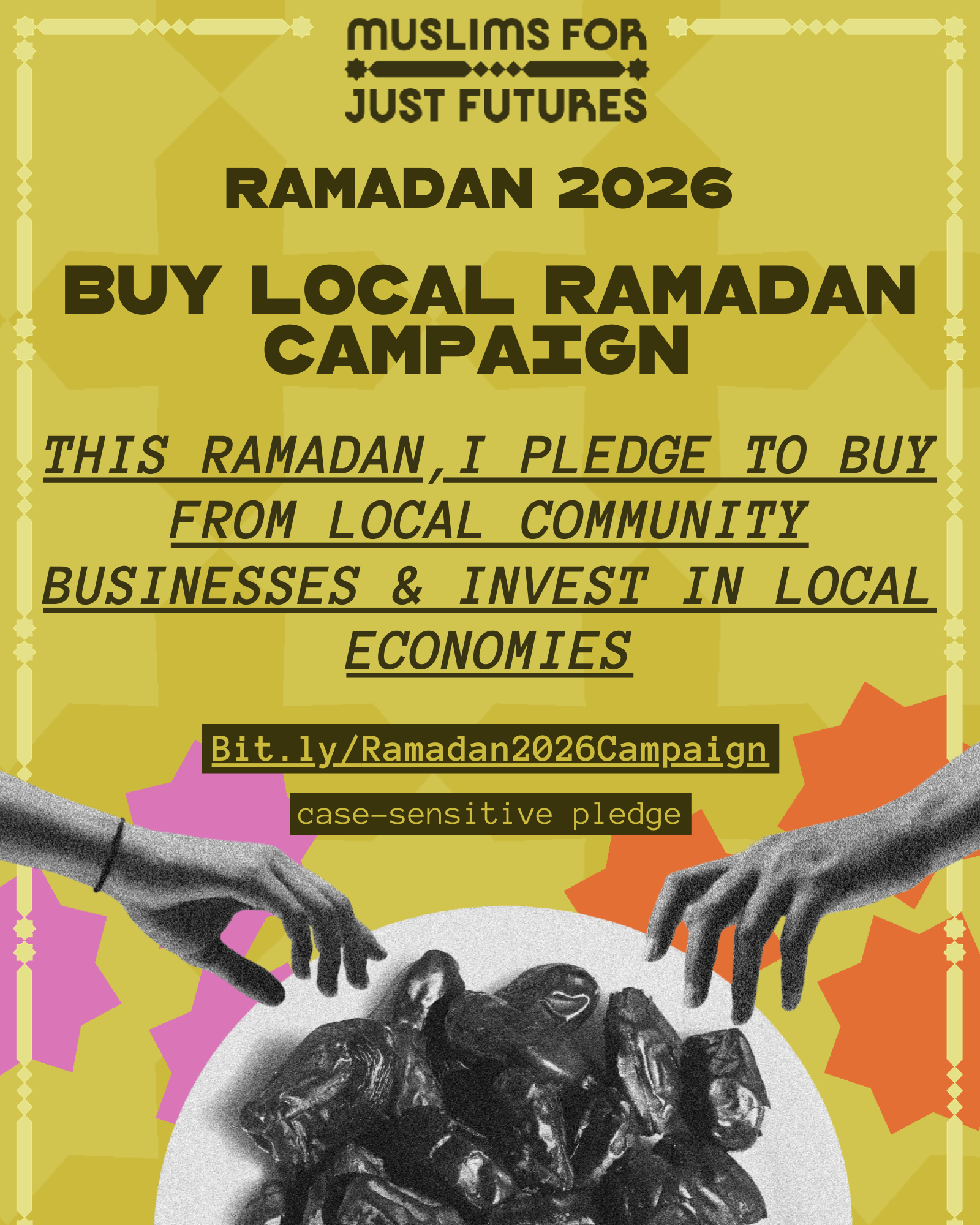
Sign this pledge to share how much you will commit to spending in local communities and share with others. Download or copy this graphic and share on social media.
#IBuyLocal #RamadanSolidarity